Judging rosin quality by sight alone is impossible.
Generally, clearer rosin is considered higher quality, but that is not always the case.
While discoloration can be a sign of impurities, it can also simply be a result of the particular strain from which the solventless hash oil (SHO) was extracted.
Nevertheless, if you see discoloration in your extract, there may be an issue that needs to be fixed.
Here are the factors that affect clarity in order of their impact.
Factors Affecting Rosin Clarity
-
Quality of the input material—higher quality input means higher quality output
-
Age of the input material—the best time to process material is right after it has finished drying and curing
- The temperature at which the material is pressed; lower temperatures mean better clarity, but lower yields
To see how these may affect the final product, we will look at the most common questions we get regarding rosin quality and go over possible causes and solutions for each issue. Head here for a detailed guide on making rosin.
The most common questions we get:
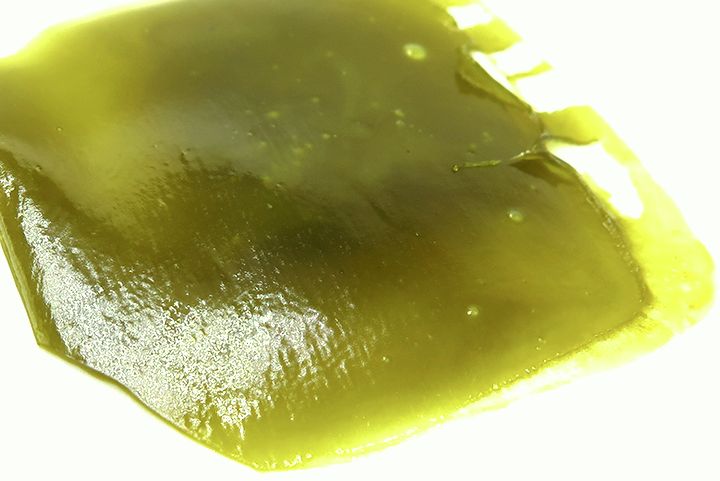
What Does Green Rosin Color Mean?
A greenish color is usually the result of plant matter in the SHO.
If you are pressing flower and are grinding them up beforehand, stop doing that first. There is no need to grind your flower.
In fact, it is better to just press the whole buds. If you have stems sticking out, remove those, but otherwise, you can leave the bud as is.
Another way to reduce or eliminate plant matter in your final product is to use a filter bag with a lower micron count. For trim, leaves, and shake, you want to use a bad with a micron count between 120 and 220. For flower, you generally want to use a 90 to 120 micron bag.
It is perfectly fine to press flowers without using a bag, but if you are getting green extract, try using a bag. If your issue is plant material in the final product, then using a bag (with a low enough micron count) should solve it.
Read much more on micron sizes for extraction bags.
You could also simply be pressing material that is too fresh. If it smells like freshly cut grass, then this is probably the case.
You’ll want to let the material sit in a jar for a few weeks and give it some time to cure (read about curing). Conversely, you don’t want to use material that is too old either. Ideally, it should be pressed soon after the cure is complete.
Temperature may be another cause. If you are using a plate temperature over 190°F for flowers, try reducing it to below 190°F. Lowering the temperature will reduce yields, but if you are having issues with green rosin, it is worth trying.
Another possible issue may be that you are applying too much pressure too quickly. Start with a low amount of pressure and hold it for 5 to 10 seconds, to let the plates warm up the material. Then increase the pressure a bit and hold it for another 5 to 10 seconds. Keep gradually increasing the pressure over the course of a minute or two, until you’ve reached full pressure.
Read much more on temperature and pressure.
Finally, it could just be a matter of contamination. Check to make sure there is no plant material on the outside of your bag and also clean the pressing surface to ensure there is no leftover material from previous extractions.
If none of these are the issue, it may also just be the input material you are using. Try a different input material and see if the final product is still colored green.
Why Is My Rosin So Dark?
Dark rosin is not necessarily a bad thing. Some high-quality material that has gone through a long curing process can result in extremely high-quality dark rosin.
That said, anyone asking why their rosin is dark is probably doing so because the quality is not high. In that case, there are two main reasons why the final product ends up being dark.
The first is the input material. As mentioned, this could be a good thing, but if you are getting poor-quality dark extract, it may be due to low-quality material or material that is too old. Try pressing different materials to see if you still get dark extract.
The second is the pressing temperature. Using a temperature that is too high will result in a darker extract. Try to keep the temperature below 220° Fahrenheit. If it is below that mark and the resulting SHO is still dark (and it’s not the material), then try reducing the temperature further or shortening the pressing time.
Rosin that is exposed to high temperatures for too long loses terpenes, so you definitely want to make sure this is not the cause of the dark color.
You also want to gradually increase the pressure. Pressing down really hard, really fast, burns the oil. You need to give it time to heat up as you press.
Applying pressure gradually also ensures that the material in the middle receives the same temperature and pressure treatment as the material on the outside. When you press down too quickly, the oils on the outside start to burn in the time it takes the material in the center to heat up enough to excrete rosin.
Finally, using a smaller screen size (bag micron count) will also help filter out impurities and may reduce or eliminate the dark color.
Why Is My Rosin So Sticky?
First of all, even if it’s sticky, don't throw it away. Let it sit for a few days. It will dry out a bit and become easier to collect.
You should also put it in the freezer before collecting it. Freezing it makes it much easier to scrape up.
If you don't always get sticky rosin, but have been with a new strain, then that is most likely the culprit. Some strains simply produce stickier extract than others.
If it’s not that (i.e., you get sticky extract with different strains), then try reducing temperature and pressure and see if it makes a difference. Combine the reduction in pressure and temperature with an increase in pressing time.
Why Is My Rosin Harsh?
Some people find larger rosin dabs a bit harsh. If that’s the case for you, try reducing the size of the dab. That should help a lot.
If you find that even small amounts are especially harsh, try changing the material you are pressing. Nothing has a greater impact on the flavor of your output than the input material.
Reducing the temperature and/or using bags with a lower micron count will also improve the flavor. Naturally, there is a trade-off: both lower temperatures and a lower micron bag will reduce yields. As always, the key is to find the best balance between yield and flavor.
Additional Questions
These are additional questions we get asked, where the answer is the same as one of the questions already discussed above.
What Should Good Rosin Look Like?
Good rosin can actually look quite different depending on the starting material, strain, and pressing conditions - so there is no single "correct" appearance. That said, here are some general benchmarks to help you evaluate what you've got.
Color - High-quality rosin typically ranges from a light golden yellow to a deeper amber. Pale yellow or near-translucent rosin is generally considered the gold standard, as it suggests clean input material, good pressing technique, and minimal contamination. Darker shades of amber are not automatically a problem — some excellent rosin is quite dark — but if your extract is trending toward green or brown, refer to the sections above for likely causes.
Texture - Fresh rosin straight off the press is usually somewhere between a sap and a taffy consistency. It may be quite fluid when warm and firm up as it cools. This is normal. If it stays extremely sticky or runny at room temperature, there is likely excess moisture in the extract. If it hardens into a shatter-like consistency, terpene loss during pressing is the most common cause.
Clarity - Holding your extract up to light can give you a rough sense of purity. Cleaner input material and proper pressing technique tend to produce a more translucent result. Cloudiness or murkiness can indicate plant matter, excess moisture, or lipids that weren't filtered out.
Keep in mind that rosin naturally changes appearance over time. Even a beautiful golden extract will darken slightly with age and exposure to air and light, which is why proper storage matters.
How Should I Store Rosin?
Proper storage has a big impact on how long your rosin stays fresh and how well it holds its colour, flavour, and potency.
Short-term (up to a few days) — Parchment paper works fine for short-term storage at room temperature, as long as you keep it away from heat, light, and air. A cool, dark spot is ideal.
Medium-term (up to a few weeks) — Transfer your extract into a small silicone or glass container and store it in the fridge. This slows terpene evaporation and keeps the consistency manageable. Silicone is convenient for stickier extracts since nothing adheres to it, while glass is the better choice if you are concerned about any interaction between the material and the container.
Long-term (months) — The freezer is your best option. Rosin stored in an airtight glass container in the freezer can maintain quality for several months. When you are ready to use it, let it come to room temperature before opening the container to prevent condensation from introducing moisture back into the extract.
A few general rules regardless of storage duration — keep rosin away from direct light, avoid repeated temperature fluctuations, and minimise air exposure as much as possible. Oxidation is one of the main reasons rosin darkens and degrades over time, so airtight containers are always preferable to leaving it on parchment.
Why Is My Rosin Brown?
Brown rosin sits somewhere between dark amber and green on the quality spectrum, and the cause is usually one of a few things.
The most common cause is oxidation. If your rosin looked fine right off the press but has since turned brown, air exposure is likely the culprit. This is why proper storage in an airtight container matters — refer to the storage section above.
High pressing temperature is another frequent cause. Excessive heat degrades cannabinoids and terpenes during the press, pushing the colour toward brown rather than golden amber. If you are seeing brown rosin fresh off the plates, try dropping your temperature and see if the colour improves. For flower, keeping plate temperature below 190°F is a good starting point.
Old or degraded input material will also produce brown extract. If the starting material has been sitting around for a long time, has not been stored well, or was already brown or tan in colour before pressing, the output will reflect that. Fresh, well-cured material is always going to produce a better result.
Contamination from previous pressings is worth checking too. Residue left on the plates from earlier sessions can burn and mix into fresh extract, affecting both colour and flavour. Get into the habit of cleaning your plates between pressings.
If your rosin is brown but was produced from quality material at a reasonable temperature and stored correctly, it may simply be a characteristic of that particular strain. As with dark rosin, brown does not automatically mean bad — taste and effect are ultimately better indicators of quality than colour alone.
Why Is My Rosin Hard?
Hard or brittle rosin that shatters like glass when you try to collect it is actually more common than you might think, and it is not necessarily a sign that something went wrong.
Terpene loss is the most likely cause. Terpenes are what give rosin its soft, pliable consistency. When terpenes evaporate — either during pressing at too high a temperature or gradually over time through air exposure — the remaining cannabinoids begin to crystallize, which is what gives rosin that hard, shatter-like texture. Lowering your pressing temperature and storing rosin in an airtight container will help preserve terpenes and keep the consistency softer.
Low-terpene input material will produce the same result regardless of technique. Some strains are naturally lower in terpenes than others, and older or poorly stored material will have lost much of its terpene content before it even hits the press. If you consistently get hard rosin from a particular strain but not others, the starting material is likely the cause rather than your process.
Cold storage can also firm up rosin significantly. If your extract is rock hard straight out of the freezer or fridge, let it sit at room temperature for a few minutes before trying to collect it. It should soften up considerably.
Hard rosin is still perfectly usable — it simply requires a little more patience when collecting. Warming your dab tool slightly before handling it can make the process much easier.
Why Is My Rosin Yield So Low?
Low yield is one of the most frustrating problems in rosin pressing, but it is almost always traceable to one of a few causes.
Input material quality is the biggest factor. Simply put, lower quality material produces lower yields. Dry, old, or poorly cured flower will always underperform compared to fresh, well-cured buds. If you are consistently getting low yields across different pressing sessions, start by evaluating the quality of your starting material.
Temperature that is too low will also reduce yield. While lower temperatures produce better quality extract, dropping too far below the optimal range means the oils never fully liquefy and flow out of the material. If you have been reducing temperature to improve clarity or colour and your yields have dropped as a result, try nudging the temperature back up slightly to find the right balance.
Pressing time may be too short. Give the material enough time to fully express its oils. Rushing the press by releasing pressure too early is one of the most common reasons for unexpectedly low yields. Try extending your pressing time and see if output improves.
Bag micron size can restrict flow. A bag with too low a micron count will filter out more than just plant material — it will also hold back some of the oil. If you are using a very fine micron bag and getting low yields, try moving to a slightly higher micron count.
Pre-pressing your material into a tight puck before loading it into the press can also make a noticeable difference. It removes air pockets and ensures the heat and pressure are applied evenly across the material, which leads to a more complete extraction.
Why Is My Rosin Runny?
Everything written above for sticky rosin applies to runny products as well. The two result from the same issue: too much moisture in the extract.
Why Is My Rosin Sappy?
Sappy rosin is also caused by too much moisture, so you’ll once again want to follow the guidelines above for sticky products.
Why Is My Rosin Oily?
Oily rosin is another instance where you’ll want to follow the same guidelines above.
We like to think of rosin extraction as an art more than a science. There is no ideal combination of pressure, pressing time, and temperature. Every strain is different and needs to be processed differently. Then you have to factor in personal tastes and preferences: one person may prefer a harsher solventless hash oil than another.
The best way to ensure a high-quality extract is to have a large amount of input material to work with. That way, you can press small amounts at a time while experimenting with pressure, time, and temperature until you find the perfect combination for your strain and your tastes.
Once you've dialled in the combination that gives you the exact balance between yield amount and yield quality you strive to achieve, remember those settings (or save them if your press has a preset function) and use them for the rest of the material.
That's how you get the highest-quality extract. A step-by-step guide on the actual pressing process.
Do you have any additional questions regarding the quality or appearance of your extract? If so, let us know in the comments below. We'll be happy to update the article with your answers.





Comments
Leave a comment